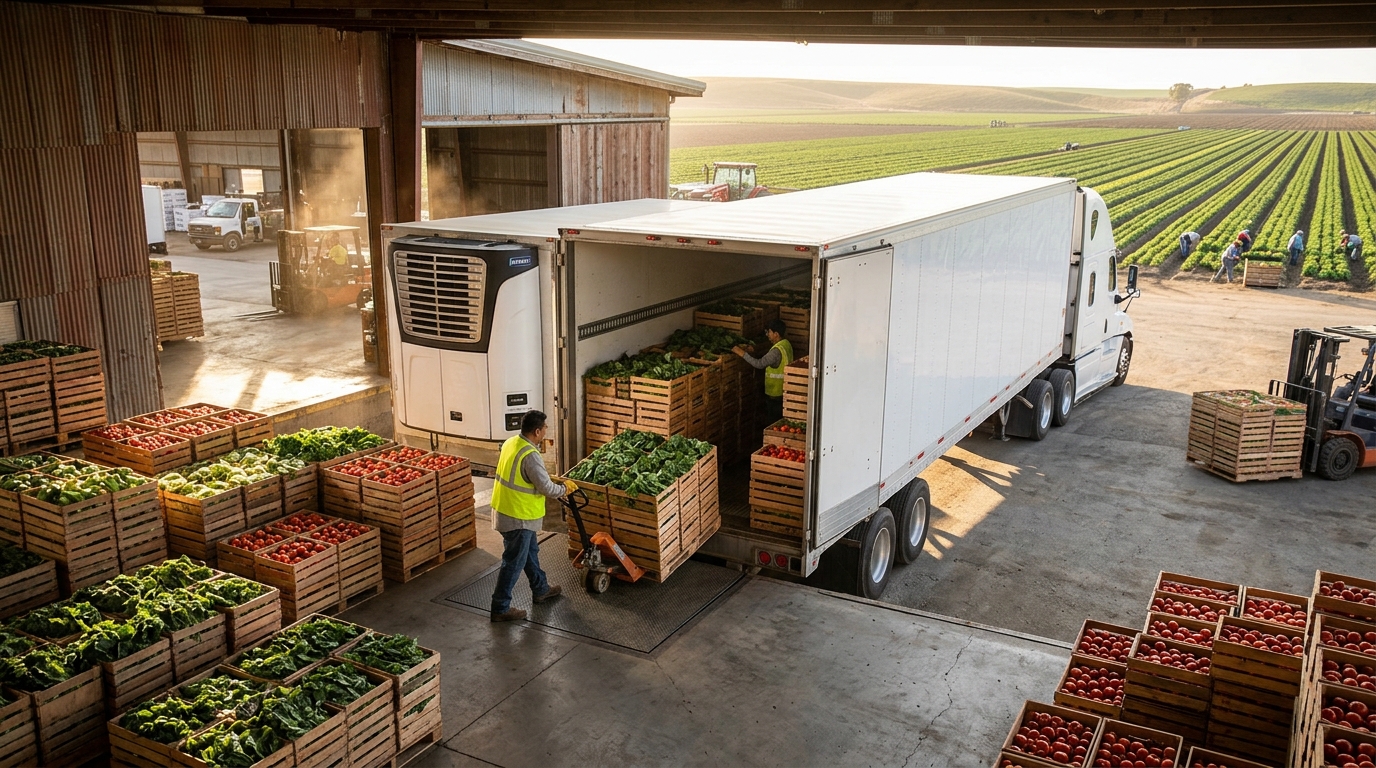
The Most Profitable Time of the Year
For owner-operators pulling a refrigerated trailer (reefer), produce season is the equivalent of the Super Bowl. When the harvest hits, the demand for temperature-controlled capacity skyrockets, and reefer load rates surge to their highest points of the year. However, navigating produce season trucking is not as simple as showing up in Florida or California and demanding $5.00 a mile. It requires strategic positioning, impeccable equipment maintenance, and aggressive negotiation tactics.
During this window, shippers are desperate. A load of strawberries or avocados has a strict shelf life. If the freight sits on a dock for an extra 24 hours because the broker couldn’t find a truck, the entire load could be rejected at the receiver, costing tens of thousands of dollars. As a reefer carrier, you are not just selling transportation; you are selling temperature integrity and speed.
Understanding the Produce Season Heat Maps
Produce season is not a static event; it moves across the country like a wave. To maximize your gross revenue, your dispatch strategy must track the harvest.
1. Spring: The Southern Surge
Produce season typically kicks off in late spring in the Southern regions. Florida (citrus, tomatoes, berries) and South Texas (importing produce from Mexico) become massive hotbeds. During this time, capacity tightening causes outbound rates from these states to explode. However, inbound rates to these states will plummet. If you negotiate a $4.50/mile outbound load from Miami, you must ensure you aren’t forced to deadhead 500 miles just to get back in.
2. Summer: The West Coast Dominance
As summer heats up, the massive agricultural engines of California, Washington, and Oregon kick into high gear. Cherries, apples, leafy greens, and grapes flood the market. The volume is staggering. Outbound freight from the Pacific Northwest and the Central Valley of California can demand massive premiums, especially for team drivers who can cross the country in two days.
3. Fall: The Great Lakes and Potato Harvest
Late summer and early fall shift the focus toward the Midwest and the Great Lakes regions, alongside the massive potato harvests in Idaho. While perhaps not as lucrative as early summer berries, these heavy loads provide consistent volume before the winter freeze sets in.
Negotiating Produce Rates: Holding the Line
When dealing with produce brokers, you must understand their position. They have a strict budget, but they also have strict penalties for failure. Here is how you negotiate peak reefer load rates:
- Check the Load-to-Truck Ratio: Use tools like DAT Trendlines to check the ratio in your current market. If there are 25 loads for every 1 reefer truck in Fresno, you hold all the leverage. Do not accept the broker’s first offer. Period.
- Factor in Lumper Fees and Detention: Produce receivers (like major grocery distribution centers) are notorious for long wait times. Your rate confirmation must clearly outline detention pay starting after two hours. Furthermore, lumper fees (the cost to unload the truck) must be covered entirely by the broker. Do not advance this money without written confirmation of reimbursement.
- Continuous Monitoring Premiums: Hauling sensitive commodities like ice cream or berries requires your reefer unit to run continuously (not on cycle-sentry). This burns more diesel. You must calculate this extra fuel burn into your Rate Per Mile (RPM) calculation.
The Risks of Produce Season Trucking
High reward comes with high risk. Hauling produce is notoriously stressful.
Temperature Claims: If your reefer unit fails, or if you set the temperature to 36 degrees when the BOL stated 32 degrees, you can be held liable for the entire load. Always pulp the product before it goes on your trailer. If the strawberries are loaded at 50 degrees, they will not cool down to 34 degrees in transit. Note this on the BOL and make the broker aware before you leave the shipper.
Weight Issues: Produce is heavy. A trailer fully loaded with watermelons or onions will push you right to the 80,000-pound limit. Ensure you scale the load immediately after pickup. You do not want to find out you are overweight 500 miles into the trip.
Why You Need a Dedicated Dispatcher During Produce Season
When rates are soaring, you need to be driving, not sitting at a truck stop making 40 phone calls to find the highest-paying load. The market moves in minutes. By the time you find a $5.00/mile load on a reefer load board, a dedicated dispatcher has already called the broker, negotiated an extra $200, and secured the rate confirmation.
At Empire Dispatch, we track national produce trends meticulously. We position our owner-operators in tightening markets days before the surge hits, ensuring they capitalize on the highest possible rates. If you want to stop guessing and start dominating produce season, it is time to outsource your logistics.
Leave a Reply